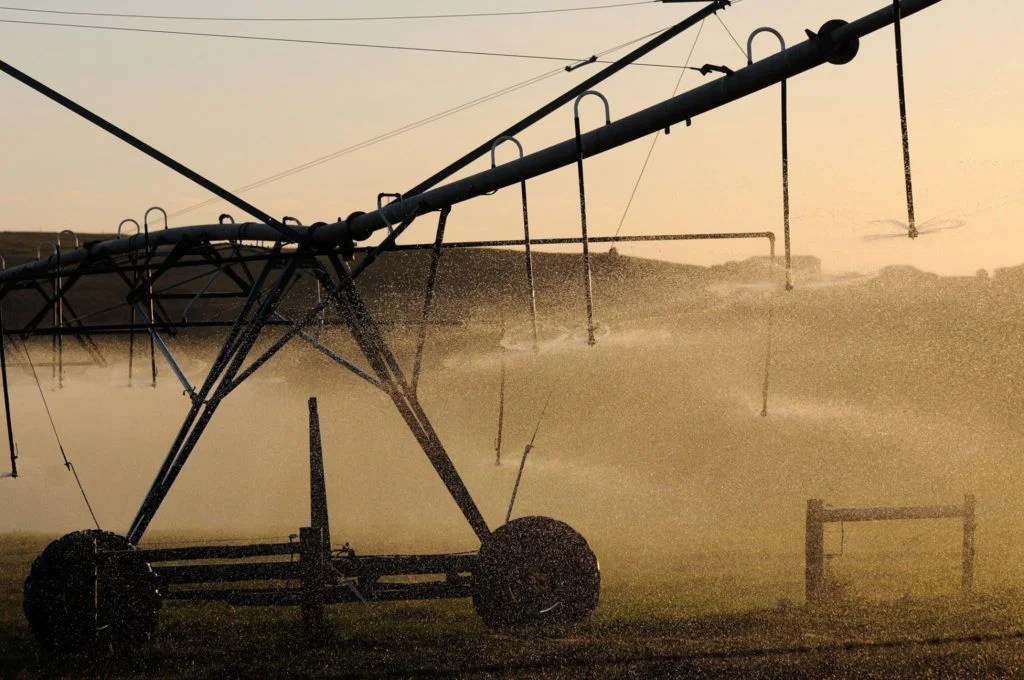
The VFF Water Council advocates for members on water issues, advises the VFF Policy Council on water policy, and represents Victoria in the water policy debate at a national level within bodies such as the National Farmers Federation (NFF).
The VFF Water Council’s main objective is to protect the interests of water users in Victoria in achieving efficient, equitable and profitable water use. The Water Council provides an objective analysis of the water issues and policies as well as formulating strategic policies and decisions at both the State and Federal levels.
Find out what the VFF is doing on your behalf across the key issues that are important to you.
Local Government Rates
Energy
Drought
Farm Crime
Covid-19
Tax
Victoria’s rating system has created the situation whereby rural ratepayers pay more in rates as a percentage of the value of their property than ratepayers in metropolitan Melbourne.
What’s more, rural ratepayers receive and have access to fewer services from local government than ratepayers in the city.
It is the long held belief and concern of the VFF that local government rates derived from farmland ratepayers are inequitable.
As farm businesses have become increasingly consolidated, the rating burden faced by individual farmers has been compounded. The local government rating system does not accurately capture a farm ratepayer’s capacity to pay, nor the benefits they receive.
The VFF is committed to working to reform Victoria’s local government rating system through the following actions:
Advocating for a complete overhaul to Victoria’s rating system.
Running local campaigns.
Conducting research and analysis of local government rates and observing trends.
As a result of the VFF’s advocacy prior to the 2018 Victorian State Election, the Victorian Government committed to undertaking an independent review of Victoria’s rating system. Our submission to the review focused on the inequity of Victoria’s rating system and put forward a plan to overhaul the system. You can read our submission here (PDF).
VFF Local Government Rates & Responsibilities Policy
The VFF is leading a standing campaign to fight for fair farm rates in every rural and regional local government area. Click here to stay up to date with the latest updates.
Our Plan for Fair Rates
In order to ease the rate burden placed on Victoria’s farming community, the VFF believes we must address the fundamental inequity that exists between all rural and metropolitan ratepayers.
Our plan for fair rates will ensure equity for all Victorian ratepayers, delivering a fair go for farmers and rural and regional communities.
Victoria should move to a local government funding model where the state sets a general rate for all property and redistribute funds collected from rates on the basis of equity and need.
This Equalised Funding Model will provide a more sustainable funding base for all local government and will ensure all Victorians, no matter where they live, receive quality and reliable infrastructure and services.
In addition to an Equalised Funding Model to produce equitable outcomes for all ratepayers, the VFF recommends the state government adopt the following policies to help farmers succeed in a competitive and unrestricted economic environment
Minimum & Maximum Rates
The Local Government Act should be amended to allow councils to apply minimum and maximum rates (by property class). We suggest the Act define a maximum total amount that a council can raise from minimum rates at 50% of general rates.
Differential Rates
The Act should be amended to require a council to use differential rates (including compulsory differential rates for farmland) to establish a fair and equitable distribution of the rate burden for each class of land and that the rate burden for each class be maintained for at least four years.
Differential rates should only be available to commercial farm businesses.
Valuation Averaging
Valuation averaging should be introduced for all councils in Victoria. Under this system, all councils would strike rates based on a moving average valuation calculated for each property over the past 5 years. The actual valuations returned each year by the Valuer-General would remain the same, but the valuation basis for the rate strike would be changed.
Separate House & Curtilage
The house and curtilage of farms should be charged a municipal rate similar to that of all other homes in the local government area. Farmland should be separated into a separate assessment with councils having the ability to rate land at the farm differential rate – or exempt the farm land from rates overall.
For further information about the VFF’s local government rates policy and advocacy, VFF members can call the VFF Policy Team on 1300 882 833 or email policyteam@vff.org.au.
To be competitive in international markets, farm businesses need reliable and affordable energy. Farms are major users of energy. Pumps, tractors, cool storage, heating and harvesting activities all need energy to operate.
The VFF’s long term approach is to secure agriculture’s energy future at affordable prices and reliability to underpin a thriving agriculture sector.
Within the intensive industries in particular, reliability is more than an economic issue. The lack of energy caused by blackouts has the potential to cause animal welfare issues.
The VFF is working with a number of parties, both government and non-government, to give industry options on both the price and the source of its energy. The VFF developed the farming cooperative RICL over 25 years ago to ensure gas access at a reasonable price for large users.
The VFF also supports targeted programs that assist farm businesses in adopting new energy efficiency practices or investing in clean energy to lower their power bills, improve productivity and reduce emissions.
Our work has led to the implementation of the Victorian Government’s Agriculture Energy Investment Plan. Under this program, farmers are eligible to apply for a dollar for dollar matching grant to assist them in upgrading their energy systems. To find out more please visit the Agriculture Victoria website.
Business Energy Advice Program
Farm businesses can access free energy advice through the Business Energy Advice Program (BEAP), which is sponsored by the Commonwealth Government. To find out more please visit the BEAP website.
Further Information
For further information about the VFF’s energy policy and advocacy, VFF members can call the VFF Policy Team on 1300 882 833 or email policyteam@vff.org.au.
he VFF is at the forefront of advocacy for programs to directly assist farmers prepare for and deal with drought events.
We are focused on long term solutions that help farm businesses prepare for drought through improving infrastructure and farming methods. We advocate for a national drought policy that sees federal, state and territory and local governments, other agricultural industry bodies, community groups, and agricultural research organisations, work together.
Our advocacy has led to a range of government responses and programs including local government rate relief, fodder for livestock, water infrastructure projects and drought preparedness grants.
In 2021, the VFF Policy Council ratified a new Drought Policy statement which guides our advocacy efforts on behalf of Victorian farmers.
For further information about the VFF’s drought policy and advocacy, VFF members can call the VFF Policy Team on 1300 882 833 or email policyteam@vff.org.au.
Farm crime includes offences ranging from illegal hunting to the theft of stock, equipment, firearms and diesel. Crime statistics show that in the year preceding to 30 March 2019, almost 3600 farm-related thefts were recorded in Victoria.
The VFF is committed to taking action on farm crime. We advocate for appropriate sanctions and penalties for criminals, targeted police resourcing to deal with farm crime and programs such as awareness campaigns to educate rural communities about farm crime and how to avoid it.
We also encourage farmers to report any incidents of farm crime. Farmers sometimes do not report thefts, because they believe little can be done to catch perpetrators and retrieve stolen stock or items. Farmers may also not report incidents of trespass because they believe the trespassers will flee long before the police can arrive to deal with the situation.
The VFF believes any person trespassing on a farm property to protest or to disrupt a business is committing an offence and should be prosecuted under the law. This also means penalties for trespass should be adequate to deter activists from trespassing.
The VFF has been working with Victoria Police to develop a strategy to deal with livestock theft and other farm crime. Victoria Police have designated Farm Crime Liaison Officers, also known as FCLOs, across Victoria who have been specially trained to deal with farm crime.
Dealing with Intruders on Farm
In response to the threat of animal activists trespassing on farms, the VFF has produced an action and information guide for farmers experiencing intruders on their farm.
To help navigate and secure the security of your farm, download the Crime Stoppers Victoria farm security checklist.
To help boost security on rural properties, Crime Stoppers is also providing free farm gate signs. The signs are 1 x per person and can be ordered from the Crime Stoppers website.
For further information about the VFF’s policy and advocacy, VFF members can call the VFF Policy Team on 1300 882 833 or email policyteam@vff.org.au.
Victorian agriculture will face many challenges as the Coronavirus situation evolves. The VFF is committed to representing our industry at the highest levels and in turn providing our members with important, accurate and timely information.
Since the first lockdowns occurred across Australia and the world, the VFF has been at the front line of advocacy on behalf of our agricultural industries. Our advocacy efforts so far have focused on:
Agriculture being classed as an essential industry to allow Victorian farmers to keep feeding Australia and the world.
Helping farm businesses manage border closures between states.
Access to labour.
Keeping supply chains open to ensure products get to market.
Further Information
For further information about the VFF’s COVID-19 policy and advocacy, VFF members can call the VFF Policy Team on 1300 882 833 or email policyteam@vff.org.au.
The VFF supports reform of Australia’s tax system to promote the principles of efficiency, simplicity, transparency, equity and fairness. Reform should focus on assisting industry and businesses to maintain and enhance competitive advantage and access to markets. Reforms should be funded through efficiency in government spending, reprioritisation of government expenditure and through defining state and federal taxation powers.
Tax reform does not mean just introducing new taxes. The VFF believes any proposal to increase a tax must be matched by an equivalent reduction in a less efficient or less equitable tax. Tax reform must also consider the specific circumstances and characteristics of the agriculture sector and rural communities including factors such as the variability of income, and the limited capacity to pass on increased costs.
VFF Tax Policy Statement
The VFF Tax Policy Statement outlines the VFF’s positions on a comprehensive range of tax issues.
As a proudly democratic organisation, VFF members determine the policy positions and advocacy priorities for Victoria’s farming community. The VFF Policy Council is currently undertaking a review of all general policy positions with the revised statements being progressively published on this website.
Please click the relevant committee below to view their policy statements.
We are a community of farmers creating a sustainable and socially responsible agricultural industry connecting with all Victorians. To discuss your needs with a Membership Representative call us now on 1300 882 833.